

Invictus Victor Asenov, “This time, I had to steer”
Victor Asenov is the only blind mountain ultramarathoner in Bulgaria. We spoke with “the Invictus” about the nine kilometres he rode solo ahead of the Giro d’Italia, the victories no one knows about, and what he expects from the technology he uses every day.
- accessibility
- interview
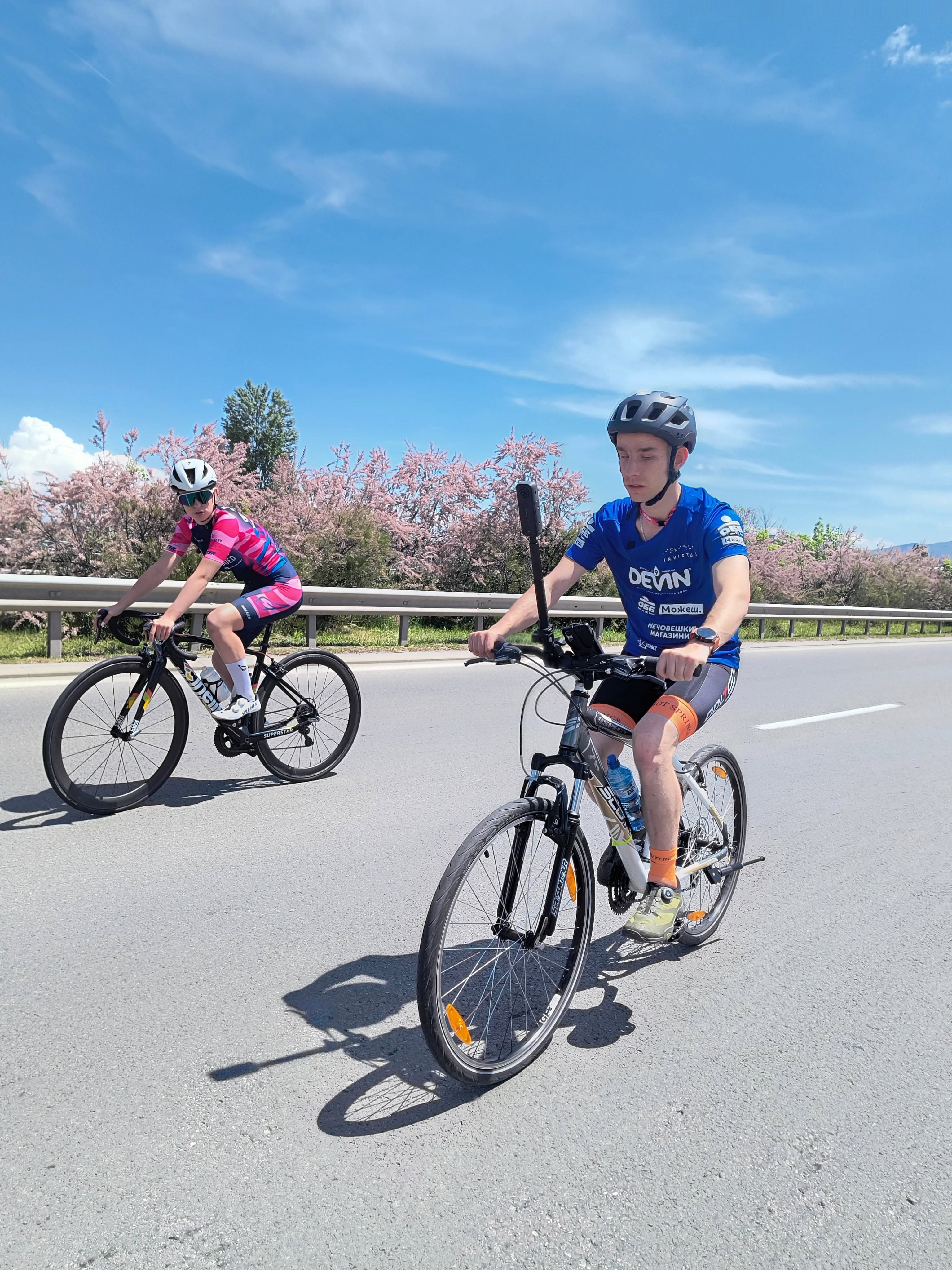
Victor Asenov is the only blind mountain ultramarathoner in Bulgaria. Born blind, he is known in mountain circles as "the Invictus", a nickname earned through a run of feats few sighted people could match: an Everesting of 19 climbs from the Aleko hut to Cherni Vrah (Black Peak) in 46 hours and 8 minutes, the Persenk Ultra (160 km), caving, and thousands of kilometres on a tandem bike.
On 10 May, hours before the Giro d’Italia finished in Sofia for the first time, Victor rode nine kilometres on his own down a closed-off Tsarigradsko Shose. No tandem, no one else’s hand on the bars.
We sat down with him to talk about that day, the wins nobody hears about, and what he wants from the technology he leans on every day.
Imagine you’re a collector of experiences: Everesting, Persenk, caves, the tandem. In May you added the nine kilometres you rode alone ahead of the Giro. Where does it sit in the collection? Is it the prize piece, or just the latest one?
I wouldn’t call it the crown jewel, but it’s up there, because it shows that for someone with a disability, nothing is off the table. And at the same time, it’s just the next one. If I hadn’t set it as a goal, an idea, a challenge worth a shot, I’d never have found out I could do it.
The hard part was that I wasn’t on a tandem with a sighted rider up front. I had to steer myself and go on what the people around me were telling me.
I do it because I want to show everyone, sighted and blind, disabled and not, that if you have a dream, turn it into a goal, and go after it, you can get there.
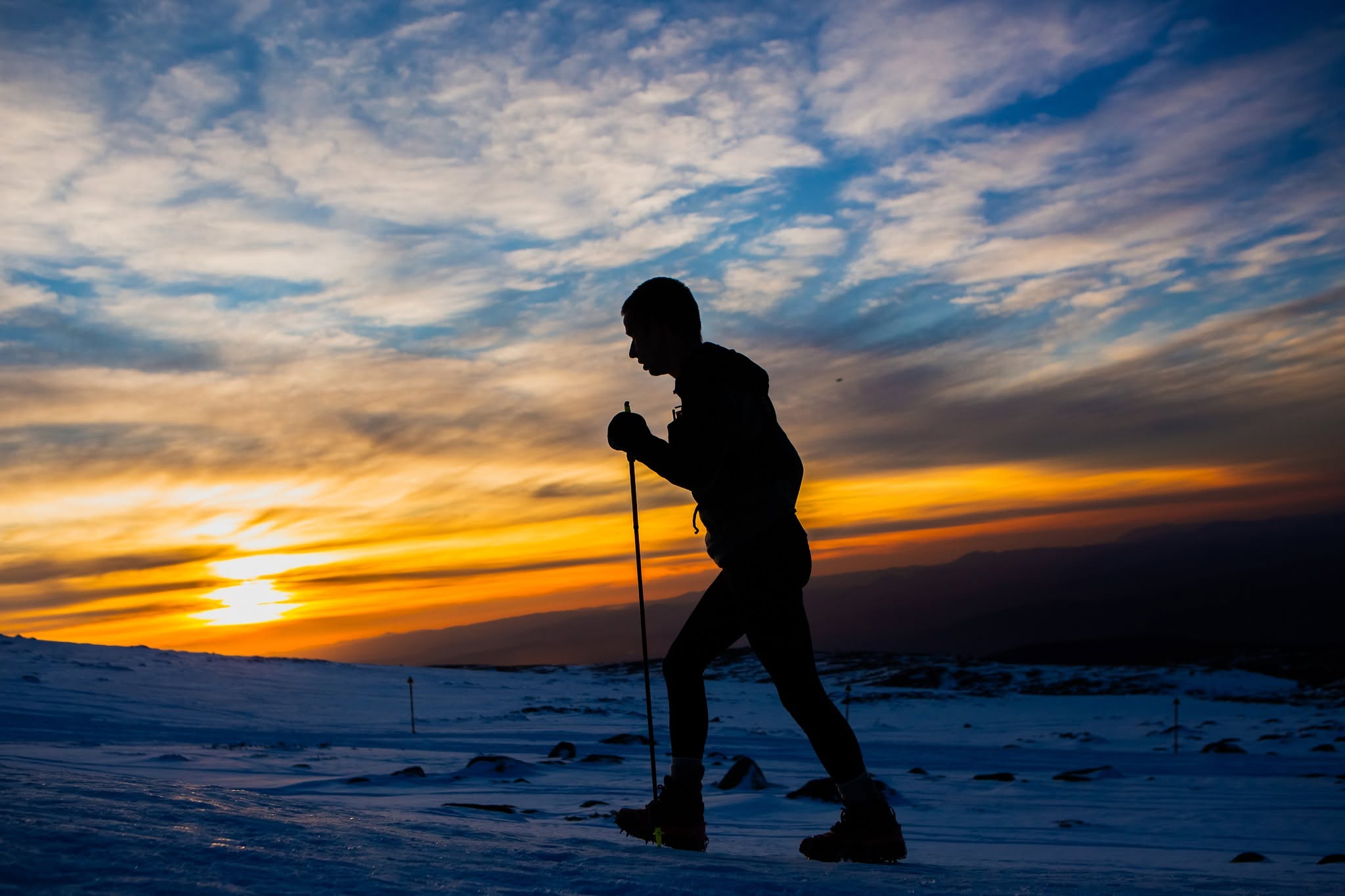
Photo: Denitsa Kirilova
How do you prepare for something like the nine kilometres along Tsarigradsko? How did you “learn” the route, and is it true you didn’t sleep the nights before, out of excitement?
I’ve been on a bike since I was little, so I know how to handle one. As a kid I’d ride when we went up to our cottage, but the road there is dirt and really narrow, so I never went fast.
I didn’t know the route beforehand. Before the event we did some tests on a closed stretch at an abandoned airfield. The main thing was to see whether I could hold a straight line while someone guided me, and it turned out I had no trouble with it. We also checked that I could stop and set off again. On the day, I had someone riding right next to me on another bike, calling out the guidance. That was all it took.
The nerves came from something else entirely. We’d been talking to the city for ages, but they clearly had a lot on. Less than a week out, they gave us the green light, and everything came together in a couple of days. The whole thing was pulled off at the last minute.
Can you take us back to that moment and describe the start, the middle, and the finish at Orlov Most? What did you hear, what did you navigate by, which was the best moment?
My ride started at the top of Tsarigradsko, about nine kilometres up. It was dead quiet up there, no crowd, no people, just me and my team. We went past a few screens showing how the racers were doing, but there was no one watching there either. The point was to get down to the people who had gathered at Orlov Most (Eagles’ Bridge).
Around the middle, near “Pliska” and the District Hospital, there were suddenly a lot more people. They were cheering.
But the best part was the finish, at Orlov Most. What mattered to me was stopping right in front of the mayor, and with my guide’s help I did, no problem. And then Mr. Terziev threw out something we hadn’t planned: “Why doesn’t Victor start the race instead of me?” I stepped up and sent the whole procession on its way.
Was that the best moment for you?
I can’t pick one, because so much of it wasn’t planned. After the start, the Giro asked to interview me. And partway through the conversation it turned out I could go through the actual finish too. We decided it right there. They said it was now or never. A matter of seconds. No prep. We just did it.
So I can’t single out one moment. The whole thing just hit hard.
You finish, you hand the horn to the mayor, the Italians beam you out to the world. What happens next, that evening, the days after? What was the world’s reaction when it found out who the Invictus Victor Asenov really is?
The Giro’s coverage caught me and my team off guard. We hadn’t gone looking for it and had no ties to them.
My message was for people: challenge yourself and go after your goals, however impossible they seem. So I’m glad the response was so warm, and I hope someone out there was pushed to keep going instead of quitting.
What I’m after is getting people to stretch themselves and take risks, in their personal life, at work, wherever. I’m not chasing the spotlight.
You’re surrounded by technology every day: the tandem, the screen reader, the apps. What went through your mind when you first heard that AI glasses for the blind are being made in Bulgaria?
I was really pleasantly surprised to learn there was a Bulgarian company behind them. So I tried the glasses straight away, and I liked them. Then I told friends and family, because there wasn’t much information out there.
Which feature did you try first when you tested the glasses, and why?
The first time was at the company’s office. I tried the environment description feature, and I liked how thoroughly and accurately the glasses describe your surroundings, how the voices sound, how they read, how they handle it all. I went for that feature because it’s something genuinely useful in daily life.
I gave them plenty of feedback and suggestions, because I could see this technology had room to grow. And I’m glad the team actually listened and made the product better.
And day to day, what do you reach for them for most?
Mainly three things: recognising banknotes, checking receipts, and reading product labels. All three do the job brilliantly.
Banknote recognition was especially valuable during the changeover between the lev and the euro, when both currencies were in circulation — the glasses helped me adapt more easily, and with more confidence.
Checking receipts is what I’ve used most so far. The glasses read out the shop’s name, the list of items, the prices and the total, and they handle the dual pricing without any trouble, which makes the transition a good deal easier for me at the moment.
I read product labels a lot when I’m shopping. Mostly I want to know what the product in front of me is, and sometimes the ingredients or the expiry date.
And of the recognition features, the one I use most is continuous environment description.
What’s your most underrated victory, something you’re proud of that nobody knows about?
One goes back quite a few years, to when I managed to talk the city into partly funding the guide dog school. But that was back in 2013. Other than that, hardly anyone knows I’ve got letters out to a whole string of institutions.
What’s the next big adventure in the collection, and is there a role in it for the glasses?
Right now my big challenges are on the bike. One I’ve got planned is seven climbs up the slopes of Mount Etna this year, from a small town to the top, back down, and up again, without stopping, until it adds up to the height of Everest.
There’s work underway on an urban navigation feature. What would it change for you?
Once the glasses can guide someone through a city, they’d definitely help with another goal of mine. I want to get to South America, Argentina and Peru especially. But that’s further down the line.
Asked what he’d say to people, Victor doesn’t miss a beat: challenge yourself, push past your limits, aim higher, in every part of life.
But he adds the second half, the bit that usually gets left out.
“Whenever you take a risk, know what could come of it too. Sometimes risks have to be measured, not so reckless.”
To an outsider, what he does doesn’t always look careful. He insists it’s the opposite: he never sets off without a fallback, without a plan B.
And on anything new that comes along, including the technology that is only just learning to describe his world:
“People have to be willing to give it a go. To give what’s new on the market a chance, and sometimes a second chance. You might not like it at first, but it’s exactly that feedback, even when it’s negative, that moves these technologies forward. Otherwise we’d be stuck with the old ways forever.”